
A triangular fibrocartilage complex (TFCC) injury is a common cause of pain on the ulnar side of the wrist (the little finger side). The TFCC is a specialised group of cartilage and ligaments that acts like a shock absorber and stabiliser between the end of the ulna and the small wrist bones. It is especially important for stabilising the distal radioulnar joint, which is the joint that lets your forearm rotate for movements like turning a key, using a screwdriver, opening a jar, or changing a doorknob.
TFCC tears can happen suddenly (acute injury) or gradually over time (degenerative wear and tear). A sudden TFCC injury often occurs after a fall onto an outstretched hand or a twisting force through the wrist. Degenerative TFCC injuries are more likely with repetitive loading, long-term wrist compression, or when the ulna is relatively longer than the radius (positive ulnar variance), which increases pressure on the TFCC with gripping and weight-bearing tasks.
Physiotherapy for TFCC injury focuses on calming pain, protecting the irritated tissues, and restoring strength, control and load tolerance so you can get back to work, sport and daily activities. A physiotherapist will also look at why the TFCC was overloaded in the first place, for example technique issues in sport, workplace set-up, grip habits, forearm strength and endurance, and how the wrist moves during tasks. The best TFCC rehab is not just rest. It is a staged plan that improves how your wrist handles twisting, gripping, weight-bearing and impact.
Anatomy:
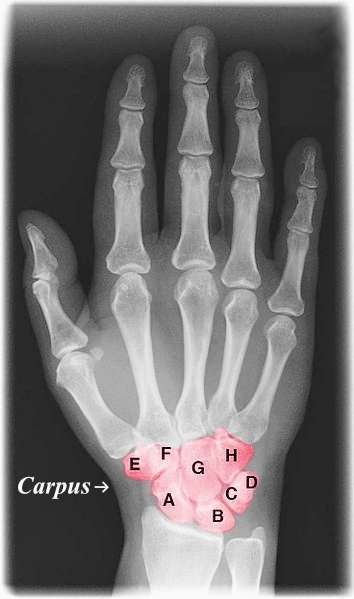
The wrist joint is formed by the two forearm bones, the radius (thumb side) and ulna (little finger side), and eight small carpal bones. The carpal bones sit in two rows. The proximal row (closer to the forearm) is the scaphoid, lunate, triquetrum and pisiform. The distal row (closer to the fingers) is the trapezium, trapezoid, capitate and hamate. The TFCC sits on the ulnar side of the wrist, between the ulna and the carpal bones, and helps the wrist stay stable while still allowing smooth rotation and side-to-side movement.
Key Facts
- Wrist arthroscopy is commonly used as the reference standard for confirming TFCC tears, and research comparing imaging methods often uses arthroscopy as the benchmark. 🔗
- TFCC injuries are a common source of ulnar-sided wrist pain and can be caused by traumatic tears or degenerative change, which helps guide physiotherapy management and prognosis. 🔗
Risk Factors
- Sports involving repeated wrist rotation or ulnar-sided loading, such as tennis, badminton, golf, gymnastics and weightlifting
- A fall onto an outstretched hand, especially with the forearm rotating at the time of impact
- Manual work requiring repetitive gripping, twisting and tool use, particularly with vibration exposure
- Positive ulnar variance or ulnocarpal impaction patterns that increase compressive load through the TFCC
- Reduced forearm and wrist strength or endurance, poor technique, or sudden spikes in training or workload
Symptoms
- Pain on the ulnar side of the wrist (little finger side), often worse with gripping, lifting, twisting or weight-bearing through the hand
- Pain or discomfort when turning the forearm (pronation and supination), such as opening jars or using tools
- Clicking, clunking or catching sensations with wrist movement, especially during rotation or side-to-side motion
- Weakness or reduced grip strength, sometimes described as the wrist feeling unreliable during heavy tasks
- Pain with side-to-side wrist tilting (ulnar and radial deviation), including pushing up from a chair
- Swelling, stiffness or reduced range of motion, particularly after aggravating activity
- A sense of instability around the distal radioulnar joint in more significant injuries
Aggravating Factors
- Twisting tasks (opening jars, turning keys, using a screwdriver, racquet sport strokes) that load wrist rotation
- Forceful gripping and lifting, especially with the wrist in ulnar deviation (tilted towards the little finger side)
- Weight-bearing through the wrist (push-ups, planks, gymnastics, getting up from the floor or a chair)
- Repetitive impact or compression through the ulnar side of the wrist (gymnastics, boxing training, heavy manual work)
- Vibration or power tool use combined with sustained gripping, which can flare ulnar-sided wrist pain
Causes
TFCC tears are usually grouped into two broad categories: traumatic tears and degenerative tears. Both can cause similar symptoms, but the underlying reason matters because it influences the best TFCC physiotherapy approach, the expected healing time, and whether there is any associated wrist instability.
Traumatic TFCC injury: A sudden tear often follows a fall onto an outstretched hand, a twisting injury, or a force that rapidly rotates the wrist. Traumatic injuries may also occur alongside fractures of the distal radius or ulna. Depending on where the TFCC is torn, there may be more or less stability of the distal radioulnar joint. Tears near the outer rim can be more painful and may have better healing potential due to better blood supply, while central tears have less blood supply and may behave differently during rehab.
Degenerative TFCC injury: Over time, repeated compression on the ulnar side of the wrist can cause fraying, thinning or perforation of the TFCC. This is more likely in people who do repetitive wrist tasks, racquet sports, weight training, gymnastics, or heavy manual work. Degenerative TFCC problems are also associated with structural factors like positive ulnar variance, where the ulna sits slightly longer relative to the radius, increasing load through the TFCC during gripping and weight-bearing.
Why it hurts: The TFCC helps transmit load and stabilise wrist rotation. When torn or irritated, tasks that compress, twist, or shear the ulnar side of the wrist can reproduce pain. The surrounding wrist muscles may also become protective and overworked, which can add forearm tightness, weakness and reduced control. Physiotherapy for TFCC injury addresses both the irritated TFCC area and the wider movement and loading pattern that is keeping symptoms going.
How Is It Diagnosed?
TFCC injury diagnosis usually starts with a detailed history and hands-on assessment. Your physiotherapist will ask where your pain is located, what activities bring it on (twisting, gripping, weight-bearing), whether there was a fall or sudden injury, and whether the wrist feels unstable or clicks. The pattern of symptoms and how your wrist behaves after load helps identify whether this is more likely a traumatic TFCC tear, a degenerative TFCC problem, or another cause of ulnar-sided wrist pain.
During the physical examination, a physiotherapist assesses wrist range of motion, grip strength, tenderness points, and the stability of the distal radioulnar joint. Specific clinical tests can be used to reproduce TFCC pain, such as compression or load-based tests and movement patterns that stress the ulnar side of the wrist. Importantly, physiotherapy assessment also looks beyond the sore spot, including forearm muscle control, wrist mechanics during sport or work tasks, and how you manage load across the week. These findings are critical for a successful TFCC rehab plan.
If symptoms are significant, persistent, or there are signs of instability, imaging may be recommended through a GP or specialist to confirm the diagnosis and rule out other injuries.
Investigations & Imaging
- X-ray
- Used to check for fractures, arthritis, and alignment issues (including ulnar variance) that can influence TFCC loading and treatment decisions.
- MRI
- Commonly used to assess soft tissues and look for TFCC tears, ligament injuries, and associated swelling or bone bruising patterns.
- MR arthrogram (MRA)
- An MRI with contrast in the joint, sometimes used to improve detection of certain TFCC tears when standard MRI is unclear.
- Wrist arthroscopy
- A minimally invasive procedure that allows direct visual assessment of the TFCC and can be used for both diagnosis and treatment in selected cases.
Grading / Classification
- Palmer Class 1 (Traumatic)
- Acute tears related to a specific injury event. Subtypes describe the tear location (central, ulnar-sided, distal/ulnocarpal, or radial-sided), which helps predict stability and guides whether rehab alone is likely to succeed.
- Palmer Class 2 (Degenerative)
- Wear-and-tear changes that progress from fraying and thinning to perforation, cartilage wear on nearby bones, and potentially arthritis in more advanced patterns. This is often linked with ulnocarpal impaction and load-related symptoms.
Physiotherapy Management
Physiotherapy for TFCC injury is the mainstay of early management for most people, including many traumatic and degenerative tears. The core goals are to reduce ulnar-sided wrist pain, protect the TFCC while it settles, restore comfortable movement, and rebuild strength and control so the wrist can tolerate twisting, gripping and weight-bearing again.
A high-quality TFCC rehab plan is individualised. Your physiotherapist will match your program to the type of tear suspected, how irritable the wrist is, whether there are signs of distal radioulnar joint instability, and what you need to get back to (work demands, sport skills, hobbies, caring tasks). Physiotherapy also includes practical strategies for modifying technique, tools and training loads so you can keep moving safely while the TFCC recovers.
Exercise
TFCC physiotherapy exercises are progressed in stages to avoid repeatedly compressing or twisting the sore ulnar side of the wrist too early. Early exercise often focuses on maintaining gentle wrist and forearm motion without provoking clicking or sharp pain, and building baseline activation in the muscles that support wrist stability.
As symptoms settle, a physiotherapist will add progressive strengthening for the wrist and forearm, especially the muscles that control forearm rotation and stabilise the distal radioulnar joint. This typically includes graded resistance work for pronation and supination, wrist extension and flexion strength, and endurance-based gripping that is carefully dosed to avoid flare-ups. If weight-bearing is relevant to your goals (gymnastics, push-ups, yoga, trades), rehab often includes a gradual return to supported weight-bearing, then partial weight-bearing, then full load, using stepwise progressions that respect TFCC tissue tolerance.
For degenerative TFCC problems, exercise also targets overall load capacity and technique changes so compressive forces through the ulnar wrist are reduced during training and work. Your physiotherapist will help you find the right balance between protecting the TFCC and rebuilding resilience.
Activity Modification
Activity modification is usually the fastest way to settle TFCC pain, but it needs to be specific to your triggers. A physiotherapist will help identify which movements are the main drivers, often twisting, heavy gripping, and end-range ulnar deviation under load. Modifications may include changing how you lift (keeping the wrist closer to neutral), using two hands for heavier items, adjusting racquet grip size or technique, altering gym exercises (for example swapping painful push-ups for less wrist-loaded options), and planning rest breaks during repetitive tasks.
For acute TFCC injuries, the early phase often involves temporarily avoiding provocative twisting and heavy ulnar-sided compression while symptoms calm. For degenerative TFCC injuries, it is common to use load pacing and smart substitutions rather than total rest, because long-term wrist conditioning and strength remain important for preventing recurrence.
A physiotherapist can also guide a graded return-to-work or return-to-sport plan so you rebuild tolerance without repeatedly flaring the TFCC. This is a major part of TFCC rehab and often determines whether symptoms truly resolve or keep cycling.
Manual Therapy
Manual therapy may be used in TFCC physiotherapy when it is appropriate for your presentation. Hands-on treatment can help reduce protective muscle guarding in the forearm, improve wrist and forearm movement quality, and address stiffness that can develop after splinting or activity restriction.
In TFCC injuries, manual therapy is not about forcing painful movements. It is used to support comfortable motion and better mechanics so strengthening and functional retraining are more effective. Your physiotherapist may also use gentle techniques around the distal radioulnar joint when there are signs that joint mechanics are contributing to symptoms, always guided by irritability and stability findings.
Postural Retraining
Postural retraining can be relevant in TFCC rehab, particularly when symptoms are linked to repetitive work or sport technique. If your shoulder and elbow position drives the wrist into repeated ulnar deviation or awkward rotation, the TFCC can be overloaded even if the wrist itself is strong. Physiotherapists commonly assess the whole upper limb chain and coach changes in reaching strategy, tool handling, keyboard and mouse set-up, and sport mechanics so the wrist can stay closer to a neutral, lower-stress position during higher volume tasks.
For athletes, this might include technique cues that reduce late, forceful wrist rotation or compressive loading on the ulnar side. For desk-based workers, it may include forearm support, mouse position changes, and reducing sustained wrist deviation. These changes often make TFCC exercises and strengthening progress faster because the wrist is no longer fighting the same aggravating setup all day.
Bracing & Taping
Bracing and taping are commonly used in physiotherapy for TFCC injury, particularly early on. A wrist brace or splint can reduce painful motion and limit aggravating positions while the TFCC settles. This is especially useful for acute injuries and for people who cannot fully avoid provocative tasks at work.
Taping can provide targeted support during sport or activity by reducing ulnar-sided compression and limiting end-range movements that reproduce pain. Your physiotherapist will choose the bracing approach based on whether symptoms are mainly from twisting, weight-bearing, or combined loads. The goal is not to brace forever. The goal is to use short-term protection while you rebuild strength, control and confidence through TFCC rehab.
Heat & Ice
Heat and ice can be useful symptom tools alongside TFCC physiotherapy, particularly in the early phase. Ice is often helpful after aggravating activity to reduce pain and settle the wrist. Heat may help when stiffness is a bigger feature, such as after splint use or first thing in the morning. Your physiotherapist can advise which option suits your symptom pattern and how to use it without relying on passive treatment alone.
Tens
TENS may be used as an adjunct for short-term pain relief in some TFCC injuries, particularly if pain is limiting sleep or the ability to start gentle exercises. In TFCC rehab, TENS is most useful when it supports better participation in activity modification, graded strengthening and functional retraining, rather than being a stand-alone solution.
Education
Education is central to successful TFCC rehab. Physiotherapists explain which movements typically load the TFCC (twisting, gripping, ulnar deviation under load, and wrist weight-bearing) and how to temporarily reduce those loads without stopping all movement. You will learn pacing strategies, how to recognise a flare-up versus normal training soreness, and how to progress exercises safely.
Education also covers practical self-management skills such as graded exposure to tasks, smarter tool or sport modifications, and how to maintain fitness while your wrist recovers. This is particularly important for degenerative TFCC injuries where long-term load management reduces recurrence risk.
Other
Other physiotherapy management may include ergonomic assessment (workstation, tool design, grip size), sport-specific technique coaching, and a structured return-to-sport plan for racquet sports, gymnastics, CrossFit-style training or manual work. If distal radioulnar joint instability is suspected, physiotherapy may focus more strongly on stability training and protection strategies, and your physiotherapist may recommend medical review if progress is limited.
Physiotherapists can also liaise with your GP, employer, coach or specialist when imaging, injections or surgical opinions are being considered, to ensure your TFCC management stays consistent and goal-focused.
Other Treatments
Other treatments may be used alongside physiotherapy for TFCC injury depending on pain levels, duration of symptoms and medical preference. Short-term anti-inflammatory medication may be recommended by a GP or pharmacist for symptom control. In selected cases, a corticosteroid injection may be considered to reduce inflammation and pain, particularly when symptoms are limiting rehabilitation progress.
These options can reduce pain, but they do not rebuild the wrist’s capacity. For long-term improvement, TFCC physiotherapy exercises, bracing where appropriate, technique changes and graded loading are usually the key drivers of recovery.
Surgery
Surgery is not required for many TFCC injuries, but it may be considered when symptoms persist despite a well-structured physiotherapy program and appropriate load management, or when there is significant wrist instability. The type of surgery depends on the tear pattern, whether it is traumatic or degenerative, and whether structural factors like ulnar variance are contributing to ongoing overload.
Common surgical approaches include arthroscopic debridement (trimming frayed tissue and smoothing edges), arthroscopic or open TFCC repair (suturing the tear, particularly in tears with better healing potential), and procedures that address underlying mechanics such as ulnar shortening osteotomy when ulnocarpal impaction contributes to degenerative tearing.
Post-operative physiotherapy is essential. TFCC surgery rehab typically includes a period of protection, followed by staged restoration of wrist motion, progressive strengthening, and a carefully planned return to gripping, twisting and weight-bearing. Without physiotherapy, stiffness, weakness and ongoing pain are more likely even if the surgical repair is technically successful.
Prognosis & Return to Activity
The outlook for a TFCC injury is generally good when the condition is identified early and managed with a structured TFCC rehab plan. Many people improve with conservative management, particularly when they follow activity modification advice and progress strengthening in stages. Some injuries settle in weeks, while others take longer, especially degenerative tears or cases where work or sport continues to load the ulnar side of the wrist.
Return to activity is based on function rather than a fixed timeline. In physiotherapy for TFCC injury, readiness is usually assessed by the ability to grip, twist and weight-bear with minimal pain during the activity and no significant flare-up in the 24 to 48 hours after. Your physiotherapist may use progressive task testing to guide return to manual work, racquet sport strokes, gymnastics skills or gym training loads.
If the wrist feels unstable, clicks painfully, or repeatedly flares with small loads, further medical assessment may be needed to check tear type and stability. Even in those cases, physiotherapy remains important for strengthening, protecting the joint, and planning safe return to normal life.
Complications
- Ongoing ulnar-sided wrist pain that becomes chronic if the TFCC continues to be overloaded without a structured rehab plan
- Reduced grip strength and forearm endurance, affecting work capacity, lifting, and sport performance
- Distal radioulnar joint irritation or instability in more significant tears, which can limit rotation and functional tasks
- Secondary movement compensations in the elbow or shoulder due to avoiding wrist rotation and loading
Preventing Recurrence
- Build and maintain wrist and forearm strength and endurance with ongoing TFCC physiotherapy exercises, particularly for rotation control and grip tolerance.
- Avoid sudden spikes in training volume or heavy gripping loads, especially activities that combine twisting with ulnar deviation, as these commonly compress the TFCC.
- Optimise technique and equipment to reduce ulnar-sided wrist compression, for example adjusting racquet grip size, using supportive taping during high-volume phases, and modifying gym exercises that load the wrist in end-range.
- Use smart pacing at work: rotate tasks, take micro-breaks, and keep the wrist closer to neutral during repetitive tool use or prolonged computer tasks to reduce cumulative TFCC stress.
When to See a Physio
- If you have persistent ulnar-sided wrist pain for more than 1 to 2 weeks, especially if gripping, twisting or weight-bearing is limited.
- If your wrist clicks or clunks with pain, feels unstable, or you cannot trust it during lifting and rotational tasks.
- After a fall onto an outstretched hand or a twisting injury, particularly if swelling and rotation pain do not settle quickly.
- If symptoms keep flaring when you return to sport or work, suggesting your TFCC load tolerance needs a structured rehab plan.